
Walk out to your pool on a July afternoon in Tampa and step onto the concrete barefoot. If that thought makes you wince, your pool deck is already telling you something.
Most Tampa homeowners don’t think about their pool deck until it becomes a problem. It gets too hot to walk on, too slippery when wet, or starts peeling and staining in ways that no amount of pressure washing fixes. By that point, the surface has usually been deteriorating for a couple of seasons already.
This guide covers what actually happens to pool deck concrete in Florida’s climate, what coating options make sense for Tampa Bay properties, and what to look for before you book anyone to do the work.
What Florida’s Climate Does to an Unprotected Pool Deck
Tampa’s weather is genuinely hard on outdoor concrete. It’s not just the heat; it’s the brutal combination of several elements happening at the exact same time.
UV Exposure All Day The sun hits Tampa pool decks from multiple angles throughout the day, and uncoated concrete absorbs all that heat. On a summer afternoon, surface temperatures on bare concrete regularly climb past 110°F. This is hot enough to make the area around the pool completely unusable during peak hours.
Pool Chemical Contact Chlorine splash lands on the deck every time someone gets in or out of the pool. Over time, those harsh chemicals break down the surface of unprotected concrete. They will also quickly degrade any coatings that weren’t specifically formulated to handle repeated chemical exposure.
Constant Moisture Cycling Tampa averages over 46 inches of rain per year, mostly concentrated in the summer months. Water gets onto the deck, sits there, and then dries out repeatedly. That relentless cycle opens hairline cracks in the concrete and gives mold the perfect damp surface to take hold in shaded areas.
High Water Table Beneath the Slab This is the factor most people completely overlook. Tampa sits on a high water table, meaning moisture vapor constantly moves up through concrete slabs from below. A pool deck coating applied without proper moisture testing will eventually lift — not because of surface damage, but because of the hydrostatic pressure building beneath it.
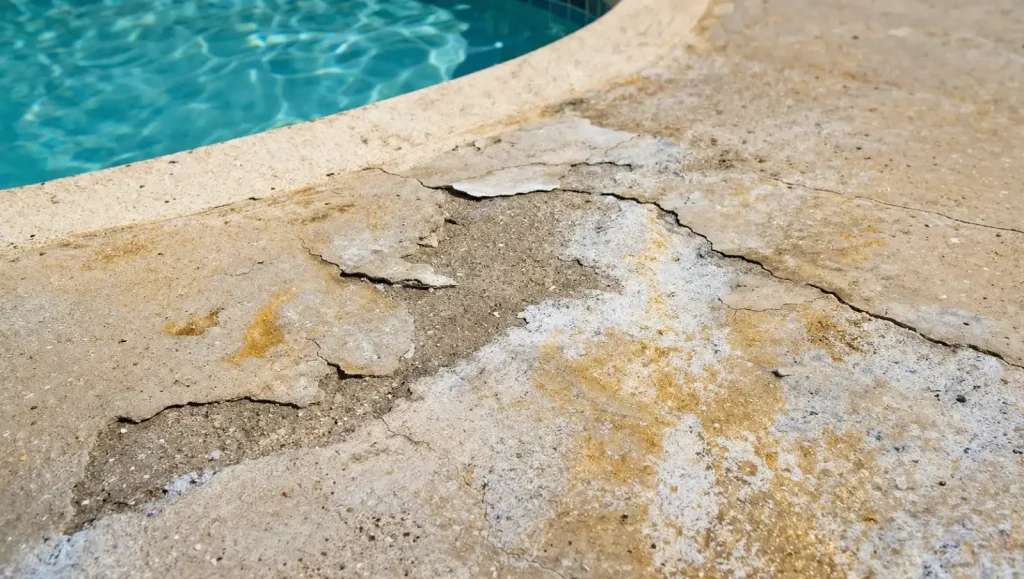
The Most Common Pool Deck Problems Across the 813 Area
Homeowners in South Tampa, Brandon, Riverview, and Westchase tend to call us about the exact same frustrations. If your deck is showing any of these signs, it needs professional attention:
- Surface too hot in the summer: Bare or lightly sealed concrete stores heat. A proper coating with a lighter finish reflects UV rays instead, making the deck usable from June through September.
- Peeling or bubbling coating: This is almost always a moisture problem. Either the slab wasn’t tested, or the wrong system was used. Once a coating lifts, it must be completely ground off before starting over.
- Slippery surface when wet: A smooth or worn pool deck is a major safety hazard. Proper slip resistance must be broadcast into the coating during the application process.
- Mold and algae growth: Covered lanais and shaded sections near enclosures are prime spots for mold. Sealed concrete removes the porous surface mold needs to root.
- Faded and stained surface: Chlorine staining and sun bleaching ruin the look of your yard. Once concrete loses its surface color, a professional resurfacing is the only permanent fix.
Coating Options for Tampa Pool Decks — What Actually Works
Not every standard garage coating performs the same way in Florida’s extreme outdoor conditions. Here is an honest breakdown of your options.
Polyaspartic Coating (The Gold Standard)
This is the most durable option for Tampa pool decks. It is 100% UV-stable, highly resistant to pool chemicals, and cures incredibly fast. A slip-resistant texture is permanently broadcast into the surface during application. This system holds up through multiple Florida summers without yellowing, peeling, or losing its premium finish.
Standard Epoxy (Not Recommended Outdoors)
Epoxy works fine in enclosed, heavily shaded areas where UV exposure is zero. However, in direct Tampa sun, standard epoxy topcoats will yellow and chalk within just one to two seasons. We do not recommend basic epoxy for open pool decks in Florida.
Acrylic Cool Deck Coatings (Budget Option)
This is a lighter, breathable option with decent heat reflection. While it costs less upfront, it is significantly less durable than polyaspartic and requires frequent resealing. It works reasonably well on older slabs that just need a quick, budget-friendly refresh.
For most Tampa Bay homeowners with outdoor pool decks, a premium polyaspartic system is the right investment. The UV stability and chemical resistance easily justify the cost when dealing with Florida’s harsh environment.
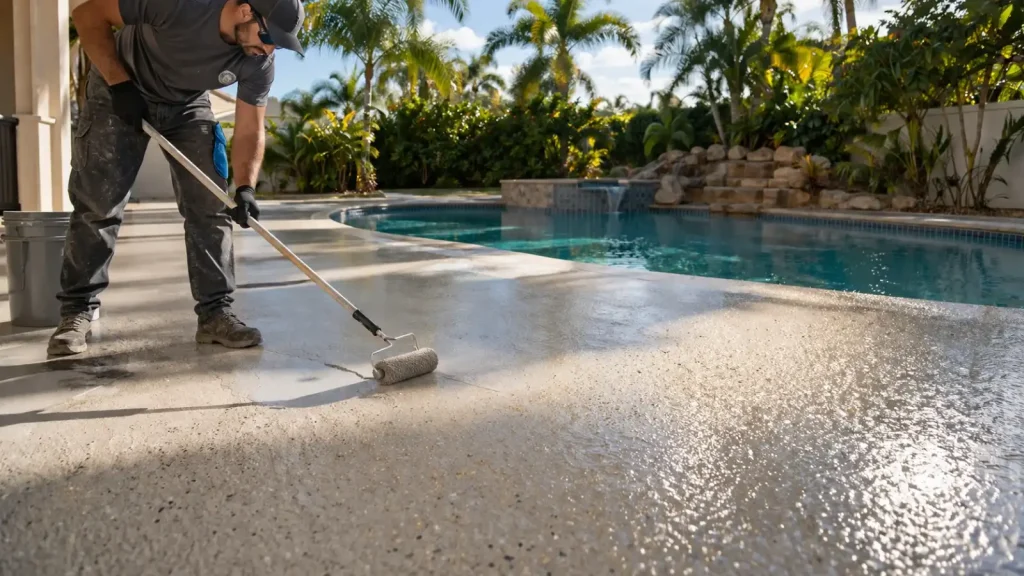
What the Professional Prep Process Must Look Like
This is exactly where most budget coating jobs go wrong. The preparation determines whether a floor lasts for decades or fails before next hurricane season.
- Moisture Testing First: Every pool deck in Tampa must be tested for moisture vapor transmission. Areas near water, like Apollo Beach and Riverview, often have elevated levels. Skipping this is just guessing.
- Mechanical Diamond Grinding: The concrete must be mechanically profiled to remove contamination, old residue, and chemical deposits. A quick pressure wash will never create the mechanical bond a coating needs.
- Deep Crack Repair: Hairline cracks must be professionally filled and leveled. Coating over open cracks just temporarily hides the problem until the slab shifts again.
Connecting Your Outdoor Surfaces
Many Tampa homeowners who coat their pool deck realize their driveways, patios, and lanais are suffering from the exact same UV and moisture damage.
If your patio or driveway is showing similar wear, it makes sense to evaluate them together. Tampa driveways deal with the same climate stress, plus the added nightmare of hot tire pickup and oil stains. Assessing all your outdoor concrete during one site visit saves time and ensures a uniform, beautiful property.
Area-Specific Considerations for Tampa Bay
Not every neighborhood in the 813 area deals with the exact same conditions. We customize our approach based on your location:
- Apollo Beach & Davis Islands: Waterfront properties face corrosive salt air alongside standard UV damage. Salt air accelerates degradation. Our advanced polyaspartic systems are specifically formulated to handle coastal environments.
- Brandon & Riverview: Newer construction in these areas often features pool decks that were never properly sealed by the builder. Unprotected slabs here show wear from chlorine splash and intense sun very quickly.
- Westchase & South Tampa: These neighborhoods have high-standard HOA communities where property appearance is strictly monitored. A properly coated deck holds its pristine finish without the headache of constant maintenance.
Questions to Ask Before Hiring a Pool Deck Contractor in Tampa
A few direct questions will reveal exactly how a contractor operates. Never hire anyone without asking these first:
- Do you test for moisture before coating? If no, they are doing it wrong for Florida conditions.
- Do you use diamond grinding for prep? Acid etching or pressure washing is never enough for a lasting bond.
- Is your topcoat 100% UV-stable? Standard epoxy will quickly turn yellow outdoors. A UV-stable polyaspartic topcoat is mandatory.
- Do you offer a written warranty? Make sure it covers adhesion failure and delamination, and get it in writing before work begins.
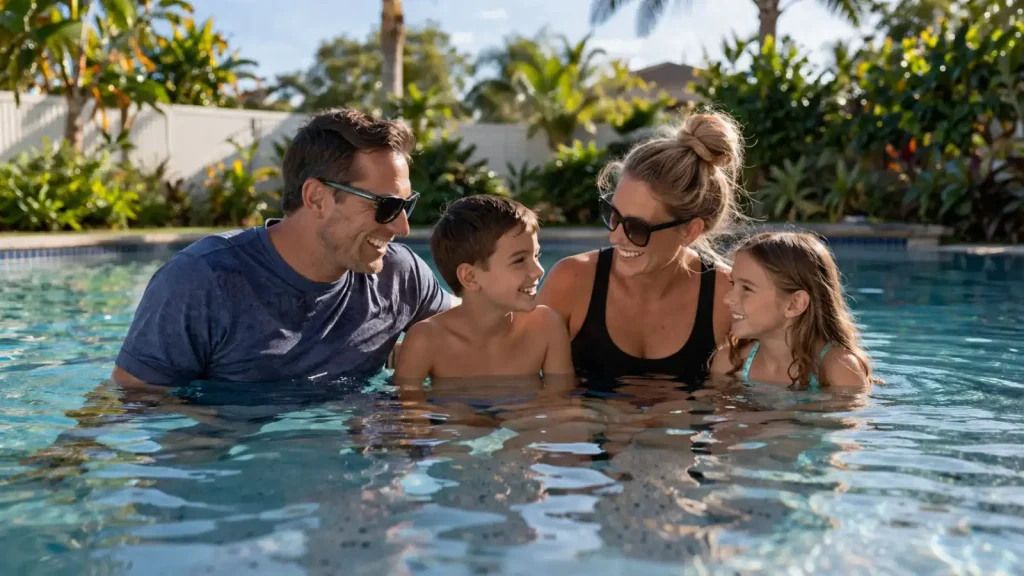
The Right Starting Point for Your Tampa Pool Deck
No quote is reliable without a physical site evaluation. Concrete varies drastically across Tampa Bay — from slab age and moisture levels to sun exposure. You simply cannot price a lasting job accurately over the phone.
A proper evaluation includes moisture testing, structural condition assessment, and a firm written estimate based on what your specific slab actually needs.
Ready to transform your pool deck into a safe, stunning, heat-resistant oasis?
Call Floor Coating Tampa today at 877-834-7693 to book your free, no-obligation Precision Site Evaluation. We assess the concrete, recommend the exact system for your deck, and provide a transparent quote before any work is scheduled. No pressure, no surprises.