Walk onto almost any screened lanai in Tampa during August, and you will notice two things right away. First, the concrete feels damp even if it has not rained since yesterday. Second, the corners near the screen enclosure probably have a faint green tint from algae starting to take hold.
Covered patios and screened lanais are the best part of owning a Florida home. However, they are also one of the hardest surfaces to keep clean. Because the roof or screen blocks direct sunlight while trapping humid air, a Tampa lanai rarely dries out completely during the summer months.
Many homeowners try to fix ugly, stained patio concrete with a weekend coat of masonry paint or a hardware store concrete sealer. Unfortunately, that approach usually fails within a single wet season. This guide explains why standard patio treatments peel in Hillsborough County and what kind of lanai floor coating Tampa homes actually need to stay clean and slip-free.
Why Screened Lanais Are Tougher on Coatings Than Open Concrete
A covered patio faces a different set of problems than an open driveway or a fully enclosed garage. In fact, the combination of shade and blowing rain creates a unique moisture trap.
- Constant moisture vapor from below: Florida sits on a high water table. After heavy afternoon storms, groundwater pushes moisture vapor up through porous concrete slabs. If a patio paint cannot breathe or lacks a strong mechanical bond, that upward pressure pushes the paint right off the slab.
- Sideways rain and slow drying times: Summer storms blow rain straight through lanai screens. Afterward, the roof blocks the sun from evaporating the puddles. As a result, standing water sits on the surface for hours, slowly breaking down cheap acrylic sealers.
- Algae, mildew, and oak leaf stains: Raw concrete acts like a hard sponge. Microscopic pores hold onto dirt, irrigation water, and organic tannins from falling leaves. Consequently, shaded lanai corners turn green and slick, forcing homeowners to drag out the pressure washer every few months.
- UV exposure near the screen edges: While the area near the house stays shaded, the outer edges of a patio bake in direct Florida sunlight. Traditional epoxy coatings turn yellow and chalky along these sunny borders within a year.
Why Patio Paint and Acrylic Sealers Keep Failing
When a patio floor starts looking rough, the most common temptation is rolling on a bucket of “1-part epoxy” concrete paint. It looks great for the first sixty days. Then, the Florida weather goes to work.
First, standard concrete paint just sits on top of the surface. When you drag a heavy patio chair across the floor or hose off dirt, the thin paint film scratches. Soon after, humid air and rain work their way underneath that tiny scratch. Within months, sheets of paint start curling up around high-traffic walkways.
Second, clear acrylic sealers wear away fast under Tampa’s UV rays and heavy rain. To keep an acrylic-sealed patio looking decent, you have to strip and reseal it every one to two years. Most homeowners do not want another annual maintenance project on their calendar.
What Works Instead: A UV-Stable Polyaspartic System
To stop the cycle of pressure washing and repainting, you have to seal the concrete pores permanently. Moreover, the material must handle direct UV rays without yellowing and resist moisture pushing up from the ground.
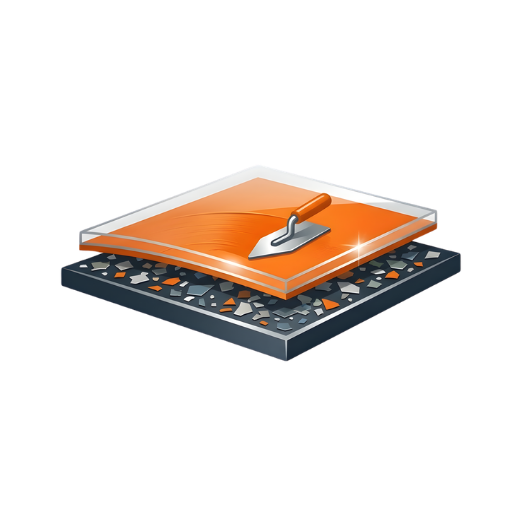
A multi-layer polyaspartic coating system solves these specific outdoor problems. Unlike thin paint, a professional installation grinds the concrete open first. Then, the base coat wicks deep into the slab pores, locking onto the concrete mechanically.
1. No More Green Algae or Mold Growth
Mold and algae need a damp, porous surface to grow roots. When we install a full-flake polyaspartic system on a Tampa lanai, the surface becomes completely non-porous. Dirt and rain sit on top of the clear coat rather than soaking into the slab. Instead of pressure washing for three hours on a Saturday, you simply hose the floor off and push the water out the screen door with a squeegee.
2. Built-In Grip for Wet Feet
A shiny patio floor is useless if someone slips on it coming out of the pool or walking in from the yard. Therefore, we broadcast a fine, slip-resistant aggregate directly into the final topcoat. You get a clean, decorative finish that still gives bare feet and sandals solid traction during a July downpour.
3. Colors That Match Florida Outdoor Spaces
A garage floor often uses bold grays and blues, whereas a back patio needs to blend with your home’s exterior, pavers, or pool tile. Polyaspartic flake blends come in warm earth tones, coastal tans, and natural stone patterns. Additionally, because polyaspartic chemistry is 100% UV-stable, the sunny edge of your lanai will remain the exact same color as the shaded section by the sliding glass doors.
How We Prep a Tampa Patio Before Any Coating Goes Down
The reason professional patio coatings last while DIY coatings peel comes down to surface preparation. Putting an expensive coating over a dirty, damp slab guarantees failure.
- Moisture testing the slab: First, we test the concrete moisture levels. Homes near the water in Apollo Beach or low-lying areas in Brandon and Riverview often hold higher slab moisture. If the reading is high, we apply a specialized moisture-mitigating primer before the base coat.
- Diamond grinding (never acid etching): Next, we use heavy planetary diamond grinders to strip away old peeling paint, embedded algae, and weak surface concrete. This opens up the slab pores so the primer bonds permanently.
- Crack and joint repair: Patio slabs often have hairline settling cracks or rough control joints. We fill and grind these flat using high-strength polyurea menders before broadcasting the decorative flakes.
Upgrading Over Existing Patio Pavers vs. Concrete Slabs
One question comes up frequently during our Tampa site evaluations: Can you coat over brick pavers on a lanai?
The honest answer is no. Polyaspartic and epoxy systems are engineered for solid concrete slabs. Brick pavers shift independently over a sand base, and moisture gets trapped between the joints. Coating over pavers leads to cracking along every single seam. However, if you have a poured concrete patio, a concrete lanai extension, or aged cool-decking that is still structurally sound, our diamond grinders can take it down to clean concrete and build a brand-new surface in a single day.
Book a Free Lanai & Patio Evaluation in Tampa Bay
Every backyard setup in Tampa Bay is a little different. A shaded lanai in Westchase surrounded by oak trees needs a different prep approach than an open waterfront patio in South Tampa baking in salt air and sun.
Before you buy another five-gallon bucket of patio paint or spend your weekend behind a pressure washer, let us take a look at your slab.
Call 877-834-7693 to book your free Precision Site Evaluation. We will check your concrete moisture levels, bring full-size flake samples you can see in your own backyard lighting, and give you a clear, written price with zero guesswork.